
Editorial
Bridging Research and Policy for Sustainable Development in the PhilippinesDear Readers,
This issue presents a collection of studies that reflect the growing breadth and depth of research addressing pressing environmental, socio-economic, and educational challenges in the Philippines. Taken together, these works collectively underscore a critical imperative: the need to more effectively translate scientific research into actionable policies. Across diverse fields, these contributions provide evidence-based insights that can directly inform decision-making, program design, and institutional reform.
In the domain of coastal and marine resource management, several studies point to both opportunities and urgent risks. Research on alternative aquaculture practices, such as bamboo substrates for abalone culture and improved survival strategies for blue swimming crab, offers practical, low-cost innovations that can be scaled through targeted government support and extension services. At the same time, findings on harmful algal species, such as Pyrodinium bahamense, along with assessment of mangrove biodiversity and reports of dugong strandings, highlight the need for strengthened coastal monitoring systems, stricter environmental regulation, and sustained investment in ecosystem conservation. Complementing these efforts are studies on aquatic animal health and regeneration, including evidence that Aloe vera extracts enhance wound healing and fin regeneration in zebrafish. Such findings demonstrate the potential of plant-based, environmentally friendly interventions to support the aquaculture and ornamental fish industries while reducing dependence on synthetic products. These are not isolated scientific observations, but are policy signals requiring coordinated national and local action.
Equally significant are studies that explore agriculture and food systems, and consumer behavior, which further reveal structural gaps that demand policy attention. Evidence on consumer preferences across income groups points to inequalities in access and affordability that must be addressed through inclusive market policies and value chain interventions. Meanwhile, documented challenges in agricultural extension services, particularly in geographically and politically complex areas such as Basilan, underscore the need to strengthen institutional capacity, improve coordination among agencies, and ensure that frontline officers are adequately supported. Without such reforms, even the most well-designed agricultural programs risk limited impact. Research on the phenotypic characterization of the Paraoakan chicken, a unique native breed of Palawan, likewise underscores the importance of preserving local genetic resources that support rural livelihoods and food security. The study provides baseline information that can guide breeding, conservation, disease management, and livestock development programs, emphasizing the role of science in supporting resilient local food systems.
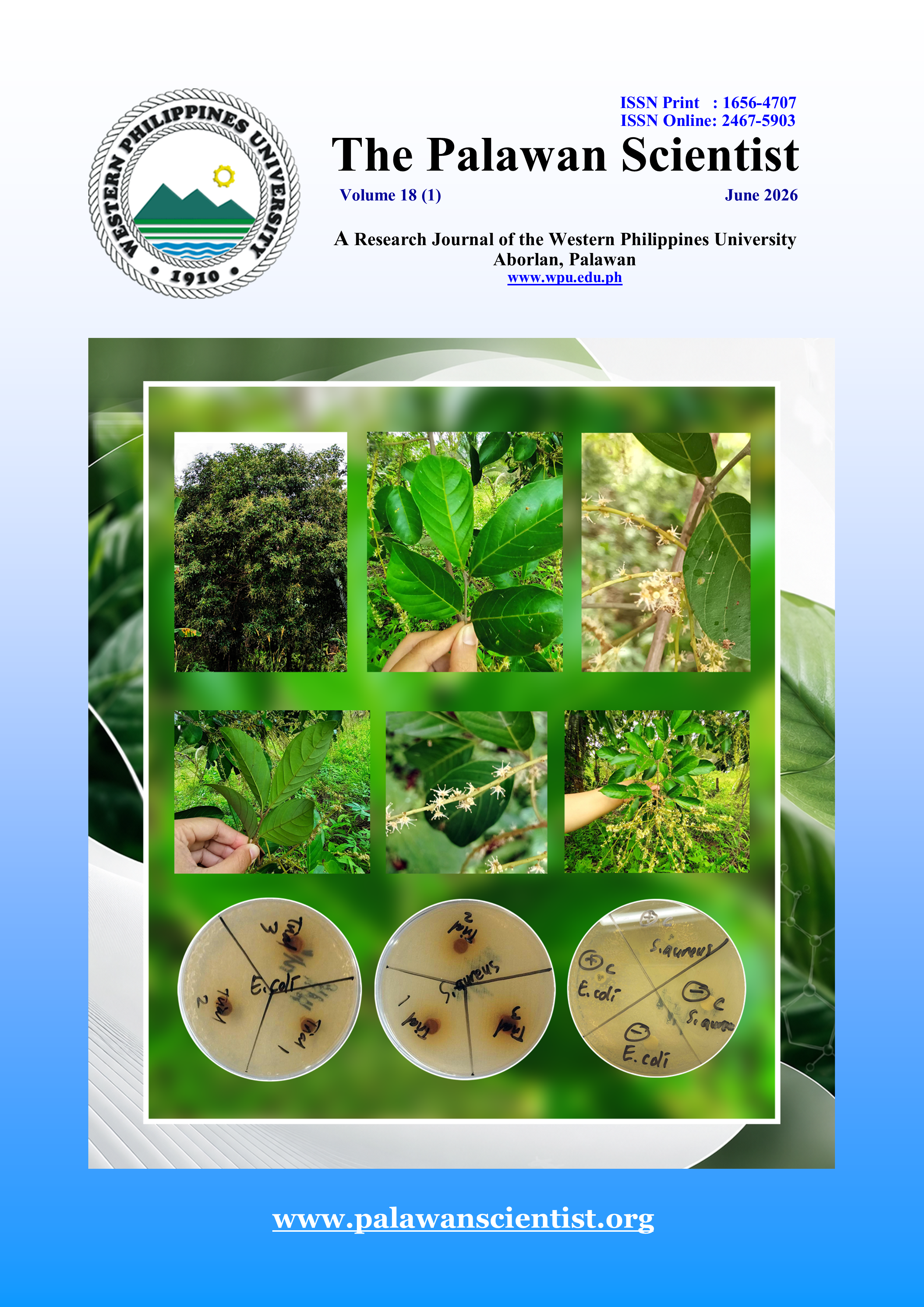
This issue also showcases advances in plant science and natural product research, which highlight the untapped potential of the Philippines’ biological resources. Studies examining agromorphological and phytochemical variations of Orthosiphon aristatus, as well as antibacterial and antioxidant properties of indigenous plants such as “duro” and Tabon-tabon, highlight the importance of documenting and valorizing local biological resources. However, realizing this potential requires clear policy frameworks on bioprospecting, intellectual property rights, and sustainable resource management. Strategic investment in research and development, coupled with support for local industries, will be essential to translate laboratory findings into real-world applications. Similarly, investigations into medicinal plants such as Aloe vera continue to expand opportunities for developing locally sourced, science-based health and aquaculture products, reinforcing the value of biodiversity-driven innovation.
Beyond the natural sciences, this collection brings attention to education and the human dimension of development, particularly in the context of rapid technological change. The documented “digital divide” between educators and students signals an urgent need for policy reforms in teacher training, curriculum design, and digital infrastructure. Similarly, findings on the reading competencies of pre-service teachers raise concerns about foundational skills that directly affect the quality of education delivery. At the same time, evidence demonstrating the positive role of artificial intelligence as a scaffold for language learning and critical thinking among university students illustrates how emerging technologies can be harnessed to improve educational outcomes when integrated through sound pedagogical frameworks. Such findings support the development of policies that promote responsible, inclusive, and evidence-based adoption of AI in higher education. These studies remind us that technological advancement must be matched with adaptive educational strategies and capacity building. Addressing these gaps requires systemic interventions, ranging from curriculum standardization to continuous professional development and targeted literacy programs.
The issue also contributes important insights into wildlife health and conservation. Findings on tick infestations in free-ranging Philippine pangolins provide valuable baseline information on parasite prevalence in one of the country’s most threatened endemic mammals. Such studies reinforce the importance of wildlife health surveillance, rescue and rehabilitation programs, and stronger conservation policies that integrate animal health into biodiversity management strategies. As emerging diseases and environmental pressures continue to threaten wildlife populations, science-based monitoring becomes increasingly essential for effective conservation planning.
Across these diverse contributions, a central message emerges: evidence must drive policy, and policy must enable implementation. The research presented here offers concrete, context-specific insights, but their value ultimately depends on whether they are integrated into planning processes, funding priorities, and governance frameworks. This calls for stronger linkages between academia, government agencies, and local communities, as well as mechanisms that facilitate the uptake of research into policy and practice.
As the Philippines confronts the intersecting challenges of environmental degradation, economic inequality, and social transformation, the role of science in policymaking cannot remain peripheral. The studies in this issue provide not only knowledge, but direction. The task ahead is clear: to move decisively from evidence to action.
Marianne Faith G. Martinico-Perez, RCh, PhD
Associate Editor—The Palawan Scientist
Designated Lecturer
Nagoya University – Asian Satellite Campuses Institute (NU ASCI)
Graduate School of Environmental Studies, Japan
DOI: https://doi.org/10.69721/TPS.J.2026.18.1.x
Published: June 17, 2026