
Agromorphological and phytochemical variations of Orthosiphon aristatus (Blume) Miq. morphotypes in the Philippines
##plugins.themes.bootstrap3.article.sidebar##
##plugins.themes.bootstrap3.article.main##

Abstract
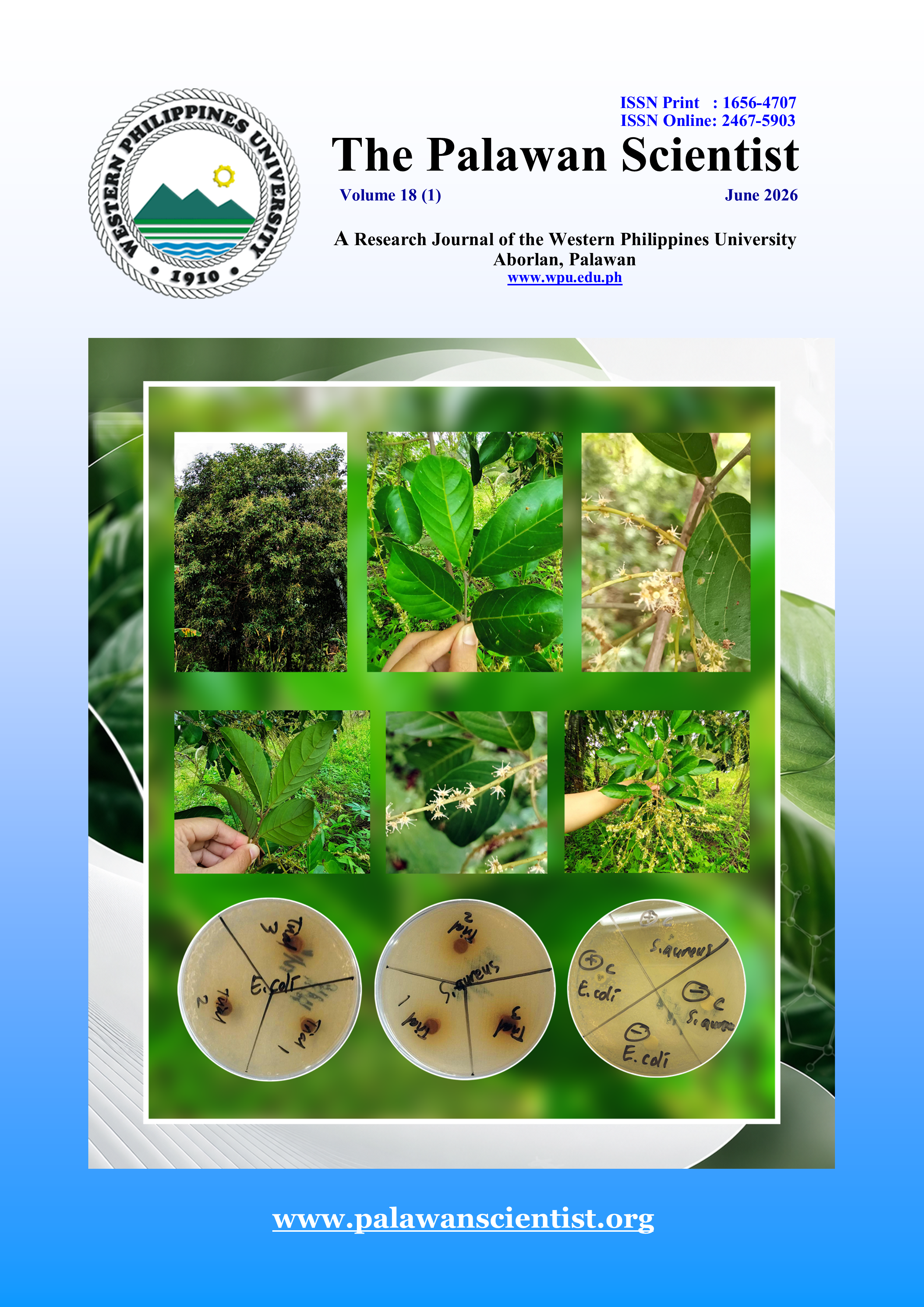
Orthosiphon aristatus (Blume) Miq. is a medicinal plant valued for its diuretic properties and potential benefits in treating kidney and urinary diseases in the Philippines. Similar to other plants, intraspecific variation exists in O. aristatus, which often leads to ambiguity in the genotype utilized and hinders its effective utilization. Hence, we characterized and evaluated the agromorphological and phytochemical properties of three Philippine accessions of O. aristatus with different inflorescence colors through a field trial conducted in a completely randomized design, to select promising accessions that could serve as genetically stable reference materials. Differences were observed in 22 out of 31 quantitative traits, while variation occurred in 12 out of 18 qualitative traits. Phytochemical traits were negatively correlated with biomass. Philippine Biorepository Network (PBN) 2019-119 (white morphotype) exhibited the highest leaf count of 2,001.75 ± 311.40 per plant, shoot number of 53.25 ± 6.65 g/plant, and dry leaf yield of 25.16 ± 3.99 g/plant. However, PBN 2018-073 (purple morphotype) had the highest total flavonoid content of 31.05 ± 1.83 mg QE/g extract and rosmarinic acid content of 2.957 ± 0.22 mg/200 g sample. Based on both agronomic and phytochemical traits, PBN 2019-119 was identified as the most promising genotype, with a high agronomic yield and intermediate phytochemical content. This is the first study to evaluate O. aristatus accessions in the Philippines. It highlights the importance of understanding infraspecific variation in O. aristatus to improve its utilization and conservation.
How to Cite
Downloads
##plugins.themes.bootstrap3.article.details##
balbas pusa, Lamiaceae, rosmarinic acid, yield, yield components
Akowuah GA, Ismail Z, Norhayati I, Sadikun A. 2005. The effects of different extraction solvents of varying polarities on polyphenols of Orthosiphon stamineus and evaluation of the free radical-scavenging activity. Food Chemistry. 93(2):311–317. https://doi.org/10.1016/j.foodchem.2004.09.028
Alem H, Torregrosa L, Rigou P, Schneider R, Ojeda H. 2021. Effect of the plant sink/source balance on the metabolic content of the Vitis vinifera L. red grape. European Journal of Agronomy. 122:126168. https://doi.org/10.1016/j.eja.2020.126168
Bovani RP, Liwanda N, Batubara I, Ambarsari L, Nurcholis W. 2024. Phytochemical content and antioxidant capacity of ethyl acetate extracts from fifteen Orthosiphon aristatus leaves genotypes. Biodiversitas Journal of Biological Diversity, 25(2). https://doi.org/10.13057/biodiv/d250236
Dayrit FB, Guidote AM. 2016. Encyclopedia of the medicinal plants of the Philippines. Quezon City Philippines: Philippine Institute of Traditional and Alternative Health Care.
Bramley G. 2019. Flora Malesiana. Series 1 Volume 23: Seed plants Lamiaceae (Labiatae) / (G.L.C. Bramley). Leiden: Naturalis Biodiversity Center. 444 p.
DOST-PCHRD (Department of Science and Technology- Philippine Council for Health Research and Development). 2022. Philippines towards a Science-Based Herbal Industry: Initiatives, Challenges, Solutions. [accessed 2024 Sep 10]. https://www.pchrd.dost.gov.ph/news_and_updates/philippines-towards-a-science-based-herbal-industry-initiatives-challenges-solutions/
Faramayuda F, Mariani TS. 2022. Sinensetin Contents of Purple and White Purple Variety of Orthosiphon aristatus (Blume) Miq. Jordan Journal of Biological Sciences. 15(1):127-132. https://doi.org/doi:10.54319/jjbs/150117
FDA (Food and Drug Administration). 2020. All Food Products. [accessed 2024 Sep 30] https://verification.fda.gov.ph/All_FoodProductsview.php?showdetail=&ACCOUNTCODE=FR-4000003539275
Gamaro GD, Suyenaga E, Borsoi M, Lermen J, Pereira P, Ardenghi P. 2011. Effect of rosmarinic and caffeic acids on inflammatory and nociception process in rats. International Scholarly Research Notices. 2011(1):451682. https://doi.org/10.5402/2011/451682
Hsu CL, Hong BH, Yu YS, Yen GC. 2010. Antioxidant and anti-inflammatory effects of O. aristatus and its bioactive compounds. Journal of Agricultural and Food Chemistry. 58(4):2150-2156. https://doi.org/10.1021/jf903557c
Kalusalingam A, Hasnu DN, Khan A, Tan CS, Menon B, Narayanan V, Goh KW, Mohd Ikmal A, Talip N, Subramanian P and others. 2024. An Updated Review of Ethnobotany, Ethnopharmacology, Phytochemistry and Pharmacological Activities of Orthosiphon stamineus Benth. Malaysian Applied Biology. 53(1):1-18. https://doi.org/10.55230/mabjournal.v53i1.2774
Lee W. 2004. Micropropagation and cell culture of misai kucing (Orthosiphon stamineus Benth.) and detection of rosmarinic acid in the in vitro cultures. [ Master’s Thesis]. [Malaysia]: Universiti Sains Malaysia. [accessed 2024 Aug 13].
Ncube B, Finnie JF, Van Staden J. 2012. Quality from the field: The impact of environmental factors as quality determinants in medicinal plants. South African Journal of Botany. 82: 11-20. https://doi.org/10.1016/j.sajb.2012.05.009
Noor S, Mohammad T, Rub MA, Raza A, Azum N, Yadav DK, Hassan MI, Asiri AM. 2022. Biomedical features and therapeutic potential of rosmarinic acid. Archives of Pharmacal Research. 45(4):205–228. https://doi.org/10.1007/s12272-022-01378-2
Olah NK, Radu L, Mogoşan C, Hanganu D. Gocan S. 2003. Phytochemical and pharmacological studies on Orthosiphon stamineus Benth. (Lamiaceae) hydroalcoholic extracts. Journal of Pharmaceutical and Biomedical Analysis. 33(1):117–123. https://doi.org/10.1016/S0731-7085(03)00227-9
POWO (Plants of the World Online). 2022. Orthosiphon aristatus (Blume) Miq. [accessed 2024 Aug 22]. https://powo.science.kew.org/taxon/urn:lsid:ipni.org:names:453446-1
Royal Horticultural Society. 2015. Royal Horticultural Society color chart. 6th ed. Royal Horticultural Society, London, UK.
Seyedan A, Alshawsh MA, Alshagga MA, Mohamed Z. 2017. Antiobesity and lipid lowering effects of Orthosiphon stamineus in high-fat diet-induced obese mice. Planta Medica. 83(08):684-692. https://doi.org/10.1055/s-0042-121754
Suddee S, Paton AJ, Parnell JAN. 2004. A Taxonomic Revision of Tribe Ocimeae Dumort. (Lamiaceae) in Continental South East Asia II. Plectranthinae. Kew Bulletin. 59(3):379-414. https://doi.org/10.2307/4110950
Tezuka Y, Stampoulis P, Banskota AH, Awale S, Tran KQ, Saiki I, Kadota S. 2000. Constituents of the Vietnamese Medicinal Plant Orthosiphon stamineus. Chemical and Pharmaceutical Bulletin. 48(11):1711–1719. https://doi.org/10.1248/cpb.48.1711
Zainuddin IM, Salsabil M, Muktabar MG, Sumardi D. 2023. Effect of PGPM and goat manure doses on biomass yield and rosmarinic acid content in cat's whiskers plant (Orthosiphon aristatus Bl. Miq). Current Research on Biosciences and Biotechnology. 4(2):289-298. https://doi.org/10.5614/crbb.2023.4.2/LIGQIUMZ

This work is licensed under a Creative Commons Attribution-NonCommercial 4.0 International License.