
Effects of fermented plant juice (FPJ) concentration and application frequency on the growth and flowering of Ruellia simplex C. Wright ‘Katie Pink’
##plugins.themes.bootstrap3.article.sidebar##
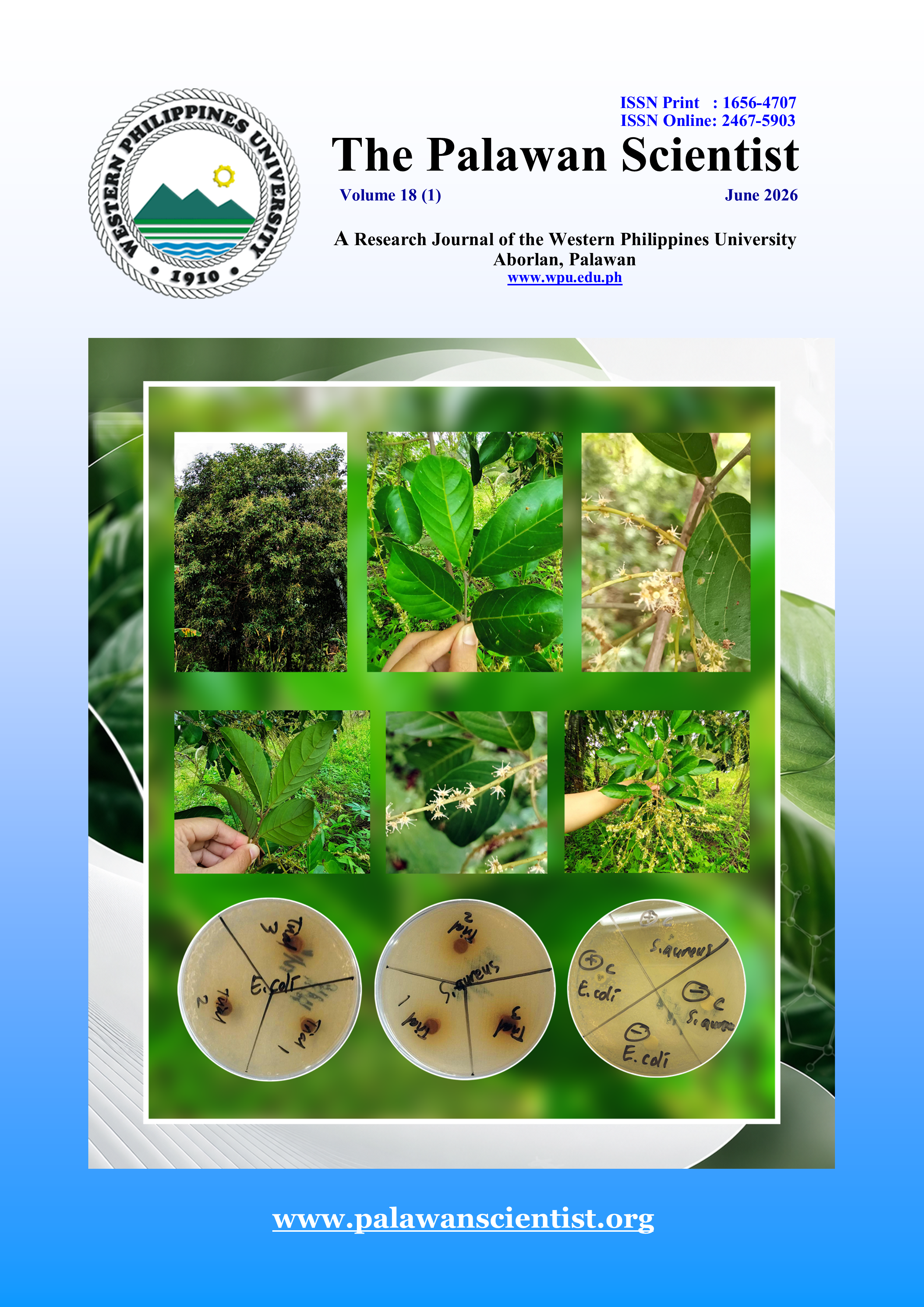
##plugins.themes.bootstrap3.article.main##

Abstract
The increasing popularity of organic farming and home gardening in the Philippines has heightened interest in sustainable alternatives to synthetic fertilizers. Fermented plant juice (FPJ), a liquid organic supplement from plant materials and molasses, shows potential for promoting plant growth and development but remains understudied in ornamental species. This study evaluated the effects of different FPJ concentrations and application frequencies on the growth and flowering responses of Ruellia simplex C. Wright ‘Katie Pink’, a widely cultivated ornamental plant. The experiment followed a completely randomized design with eight treatments, including different FPJ concentrations (1.5%, 3%, 6%) and application frequencies (once, twice, four times, and eight times per month), along with ammonium sulfate (21-0-0) and a control (T1 - no fertilizer application). Results showed that application of ammonium sulfate (21-0-0) (T8) significantly enhanced all growth parameters and flowering traits, including plant height, leaf number, chlorophyll content, and flower production. Among the FPJ treatments, 6% FPJ applied eight times per month (T7) demonstrated the best performance in both vegetative and reproductive development, characterized by early bud emergence, the highest bud count, and high root volume. However, its flower conversion rate (52.4%) was lower than that of T8 (86.6%), although the difference was not statistically significant. Treatments with lower FPJ concentrations or reduced application frequency resulted in delayed or absent flowering but still performed better than the control (T1). These findings highlight the importance of optimizing both FPJ concentrations and application frequency. High-concentration and high-frequency FPJ applications can enhance plant growth and reproductive performance, making FPJ a viable and sustainable alternative to chemical fertilizers when properly managed.
How to Cite
Downloads
##plugins.themes.bootstrap3.article.details##
ammonium sulfate, concentration, frequency, organic fertilizer, ornamental plant
Alam E. 2021. Lettuce Grown in the Open Field and Protected Culture Applied with Different Fermented Plant Juices. Lukad: An Online Journal of Pedagogy. 1(2):109-120.
Al-Dosary NMN, Abdel-Sattar M, Aboukarima AM. 2022. Effect of Ammonium Sulphate Incorporated with Calcium Nitrate Fertilizers on Nutritional Status, Fruit Set and Yield of Pomegranate Trees cv. Wonderful. Agronomy. 12(4):971. https://doi.org/10.3390/agronomy12040971
Anuada PM, Pascual PR, Carabio DE 2021. Combined organic fertilizer application improved growth and yield of cherry tomato (Solanum lycopersicum L.). International Journal of Research in Agronomy. 4(2):75-80. https://doi.org/10.33545/2618060X.2021.v4.i2a.106
Baek G, Yoon J, Shin N-H, Choi J, Park Y-J, Chin JH, Cho L-H. 2026. Coordinating nutrient supply and flowering time for sustainable agriculture. Journal of Experimental Botany. 77(4):969–984. https://doi.org/10.1093/jxb/eraf492
Bashaboina S, Prasanth P, Salma Z, Jyothi G, Kumar P. 2025. Effect of nutrient compositions on growth of ornamental foliage plants in vertical gardening. Plant Science Today. 12(sp4):1-9. https://doi.org/10.14719/pst.11627
Biswas SS, Natta S, Kalaivanan NS, Gowda HC, De LC, Das SP. 2025. Potassium application enhances vegetative and reproductive yield of Zygopetalum maculatum and reduces post-flowering K depletion from storage organs of the orchid. Scientific Reports. 15:10907. https://doi.org/10.1038/s41598-025-89452-9
BAFS (Bureau of Agriculture and Fisheries Standards). 2014. Philippine National Standard: Organic Agriculture Standards: Organic Plant Supplement. Department of Agriculture. [accessed 2026 Mar 15]. https://www.scribd.com/document/820932158/PNS-BAFS40-2014-OrganicFertilizer-0
Caipang CMA, Avillanosa AL. 2019. Backyard farming of tilapia using a biofloc-based culture system. The Palawan Scientist, 11:1-16. https://doi.org/10.69721/TPS.J.2019.11.1.01
Chojnacka K, Moustakas K, Witek-Krowiak A. 2020. Bio-based fertilizers: A practical approach towards circular economy. Bioresource Technology. 295:122223. https://doi.org/10.1016/j.biortech.2019.122223
Denona M, Baladjay A, Turnos N. 2020. Enhancing leaf mustard (Brassica juncea L.) productivity using nitrogen-based fermented plant juice (FPJ). Journal of Agricultural Research, Development, Extension, and Technology. 2(1):31-39. https://doi.org/10.5281/zenodo.8248046
du Jardin P. 2015. Plant biostimulants: Definition, concept, main categories and regulation. Scientia Horticulturae. 196:3-14. https://doi.org/10.1016/j.scienta.2015.09.021
Furtini Neto AE, Boldrin KVF, Mattson NS. 2015. Nutrition and Quality in Ornamental Plants. Ornamental Horticulture. 21(2):139. https://doi.org/10.14295/aohl.v21i2.809
Gaytancıoğlu O, Yılmaz F. 2024. Sustainable Paddy Farming in Edirne: Evaluating the Impacts of Excessive Fertilizer and Pesticide Use. Sustainability. 16(17):7814. https://doi.org/10.3390/su16177814
Gilman E. 1999. Ruellia brittoniana – Mexican bluebell. Fact Sheet FPS-513. Environment Horticulture Department, Florida Cooperative Extension Service, Institute of Food and Agricultural Sciences, University of Florida. [2015 December 09]. https://edis.ifas.ufl.edu/fp513.
Gülüt KY, Şentürk GG. 2024. Impact of nitrogen fertilizer type and application rate on growth, nitrate accumulation, and postharvest quality of spinach. PeerJ. 12:e17726. https://doi.org/10.7717/peerj.17726
Heriansyah P, Aziz SA, Sukma D, Nurcholis W. 2025. Optimizing phosphorus application to enhance flowering and phytochemical profiles in black orchid (Coelogyne pandurate Lindl.). Ornamental Horticulture. 31:e312839. https://doi.org/10.1590/2447-536X.v31.e312839
Hiywotu AM. 2025. Advancing sustainable agriculture for goal 2: zero hunger - a comprehensive overview of practices, policies, and technologies. Agroecology and Sustainable Food Systems. 49(7):1027–1055. https://doi.org/10.1080/21683565.2025.2451344
Jamovi. 2024. Jamovi project Version 2.5. (Computer Software). [accessed 2023 August 18].https://www.jamovi.org.
Joiner JN, Poole RT, Conover CA. 1983. Nutrition and Fertilization of Ornamental Greenhouse Crops. In: Janick J, editor. Horticultural Reviews. 1st ed. Wiley. p. 317–403. [accessed 2026 Apr 21]. https://onlinelibrary.wiley.com/doi/10.1002/9781118060728.ch7
Keliikuli A, Smith K, Li Y, Lee CN. 2019. Natural Farming: The Development of Indigenous Microorganisms Using Korean Natural Farming Methods. College of Tropical Agriculture and Human Resources University of Hawai’I at Manoa. 9p.
Khoddamzadeh AA, Nogueira Souza Costa B, Munoz-Salas MN. 2025. Precision Fertilization Strategies Modulate Growth, Physiological Performance, and Soil–Plant Nutrient Dynamics in Sabal palmetto. Soil Systems. 9(4):121. https://doi.org/10.3390/soilsystems9040121
Li W, Guo S, Liu H, Zhai L, Wang H, Lei Q. 2018. Comprehensive environmental impacts of fertilizer application vary among different crops: Implications for the adjustment of agricultural structure aimed to reduce fertilizer use. Agricultural Water Management. 210:1-10. https://doi.org/10.1016/j.agwat.2018.07.044
Lisenbee W, Saha A, Mohammadpour P, Cibin R, Kaye J, Grady C, Chaubey I. 2024. Water quality impacts of recycling nutrients using organic fertilizers in circular agricultural scenarios. Agricultural Systems. 219:104041. https://doi.org/10.1016/j.agsy.2024.104041
Lorio JP, De Asis GS. 2021. Effects of organic soil amendments for growth, yield, and fruit contents of hot pepper (Capsicum Frutescens L.). AGRIKULTURA Central Bicol State University of Agriculture Research and Innovation Journal. 1(1): 21-31.
Maaz TM, Dobermann A, Lyons SE, Thomson AM. 2025. Review of research and innovation on novel fertilizers for crop nutrition. npj Sustainable Agriculture. 3(1):25. https://doi.org/10.1038/s44264-025-00066-0
Malhotra H, Vandana, Sharma S, Pandey R. 2018. Phosphorus Nutrition: Plant Growth in Response to Deficiency and Excess. In: Hasanuzzaman M, Fujita M, Oku H, Nahar K, Hawrylak-Nowak B, editors. Plant Nutrients and Abiotic Stress Tolerance. Singapore: Springer Singapore. p. 171–190. [accessed 2026 Mar 9]. http://link.springer.com/10.1007/978-981-10-9044-8_7
Mannino G. 2025. Plant-biostimulants interaction: scientific trends, markets dynamics, and real-world implication. Journal of Plant Interactions. 20(1):2572668. https://doi.org/10.1080/17429145.2025.2572668
Oner F. 2024. Effects of nitrogen doses on stomatal characteristics, chlorophyll content, and agronomic traits in wheat (Triticum aestivum L.). PeerJ. 12:e18792. https://doi.org/10.7717/peerj.18792
Pagluanan ER, Anical RV. 2010. Growth and yield performance of different vegetables applied with organic fertilizers [Summary]. Journal of International Society for Southeast Asian Agricultural Sciences. 16(2):159-160.
Paull J. 2009. A Century of Synthetic Fertilizer: 1909-2009. Journal of Bio-Dynamics Tasmania. 94:16-21.
Reganold J, Wachter J. 2016. Organic agriculture in the twenty-first century. Nature Plants. 2:15221. https://doi.org/10.1038/nplants.2015.221
Rouphael Y, Colla G. 2020. Editorial: Biostimulants in Agriculture. Frontiers in Plant Science. 11:40. https://doi.org/10.3389/fpls.2020.00040
Ruamrungsri S, Panjama K, Ohyama T, Inkham C. 2021. Nitrogen in Flowers. In: Nitrogen in Agriculture - Physiological, Agricultural and Ecological Aspects [Working Title]. IntechOpen. [accessed 2026 Mar 9]. https://www.intechopen.com/online-first/nitrogen-in-flowers.
Sakimin S, Rahim N, Juraimi A, Alam M, Aslan F. 2017. Effects of fermented plant juice and fruit juice on growth and yield of tomato for sustainable practices. Bangladesh Journal Botany. 46(1):405-412.
Schrader J, Shi P, Royer DL, Peppe DJ, Gallagher RV, Li Y, Wang R, Wright IJ. 2021. Leaf size estimation based on leaf length, width and shape. Annals of Botany. 128(4):395–406. https://doi.org/10.1093/aob/mcab078
Seufert V, Ramankutty N. 2017. Many shades of gray—The context-dependent performance of organic agriculture. Science Advances. 3(3):e1602638. https://doi.org/10.1126/sciadv.1602638
Sharafi S, Mottaghi F, Omidvari F. 2025. Tracking agricultural transformation: fertilizer efficiency and crop production trends worldwide (1961–2022). Cleaner and Circular Bioeconomy. 12:100191. https://doi.org/10.1016/j.clcb.2025.100191
Silva ALJ, De Farias OR, Corrêa ÉB, De Lacerda CF, De Melo AS, Oliveira MDDM. 2025. Biostimulant modulate the physiological and biochemical activities, improving agronomic characteristics of bell pepper plants under salt stress. Scientific Reports. 15(1):14969. https://doi.org/10.1038/s41598-025-99414-w
Silva EL, Tavares MHF, Secco D, Barbosa GMDC, Costa MSSDM, Basegio D. 2024. Impacts on soil quality with the use of organic fertilizers. Observatório De La Economía Latinoamericana. 22(11):e7983. https://doi.org/10.55905/oelv22n11-240
Singh S, Gopal R, Mohanty LK, Kumar A, Panotra N, Kundal S, Upadhyay L, Tetwar S. 2025. Sustainable Agriculture Practices: A Way to Enhance Crop Productivity and Environmental Health. Archives of Current Research International. 25(12):276–292. https://doi.org/10.9734/acri/2025/v25i121669
Stickler FC, Wearden S, Pauli AW. 1961. Leaf Area Determination in Grain Sorghum1. Agronomy Journal. 53(3):187–188. https://doi.org/10.2134/agronj1961.00021962005300030018x
Sulok KMT, Ahmed OH, Khew CY, Zehnder JAM, Jalloh MB, Musah AA, Abdu A. 2021. Chemical and biological characteristics of organic amendments produced from selected agro-wastes with potential for sustaining soil health: A Laboratory Assessment. Sustainability. 13(9):4919. https://doi.org/10.3390/su13094919
Sunga AB, Advincula JL. 2021. The “plantito/plantita” home gardening during the pandemic. Community Psychology in Global Perspective. 7(1):88–105. https://doi.org/10.1285/I24212113V7I1P88
Taer AN, Taer EC, Cordiva SM. 2025. Optimization of Fermented Bio-Regulators Applied to Soil and Leaves for Sustainable Okra (Abelmoschus esculentus) Production. Journal of Agricultural Biotechnology. 6(1):1-13. https://doi.org/10.58728/joinabt.1595917
Tagkas CF, Rizos EC, Markozannes G, Karalexi MA, Wairegi L, Ntzani EE. 2024. Fertilizers and Human Health – A systematic review of the epidemiological evidence. Toxics. 12:1-22. https://doi.org/10.3390/toxics12100694
Tagotong MB, Corpuz O. 2015. Bio-organic Fertilizer on Pechay Homegarden in Cotabato. SSRN Electronic Journal. [accessed 2026 Mar 9]. https://doi.org/10.2139/ssrn.3530636
Tütüncü M, Şekerci AD, Dönmez D, İzgü T, Isak MA, Şimşek Ö. 2024. Plant biostimulants in ornamentals: Enhancing growth and stress tolerance. Advances in Horticultural Science. 38(2):211–222. https://doi.org/10.36253/ahsc-15253
Velten S, Leventon J, Jager N, Newig J. 2015. What Is Sustainable Agriculture? A Systematic Review. Sustainability. 7(6):7833-7865. https://doi.org/10.3390/su7067833
Wilson SB, Burkhead A, Adams CR, Freyre R, Fox AM, Stocker R. 2020. Natural Area Weeds: Mexican Petunia (Ruellia simplex). EDIS. 2020(6). https://doi.org/10.32473/edis-ep415-2020
Win PP, Park H-H, Kuk Y-I. 2025. Integrated approach of using biostimulants for improving growth, physiological traits, and tolerance to abiotic stressors in rice and soybean. Agronomy. 15(10):2265. https://doi.org/10.3390/agronomy15102265
Ye T, Li Y, Zhang J, Hou W, Zhou W, Lu J, Xing Y, Li X. 2019. Nitrogen, phosphorus, and potassium fertilization affects the flowering time of rice (Oryza sativa L.). Global Ecology and Conservation. 20:e00753. https://doi.org/10.1016/j.gecco.2019.e00753
Zhang H, Zhao Q, Wang Z, Wang L, Li X, Fan Z, Zhang Y, Li J, Gao X, Shi J, and others. 2021. Effects of Nitrogen Fertilizer on Photosynthetic Characteristics, Biomass, and Yield of Wheat under Different Shading Conditions. Agronomy. 11(10):1989. https://doi.org/10.3390/agronomy11101989

This work is licensed under a Creative Commons Attribution-NonCommercial 4.0 International License.