
Evaluation of the antioxidant and phytochemical analysis of Tabon-tabon (Atuna racemosa Raf) methanol fruit extract
##plugins.themes.bootstrap3.article.sidebar##
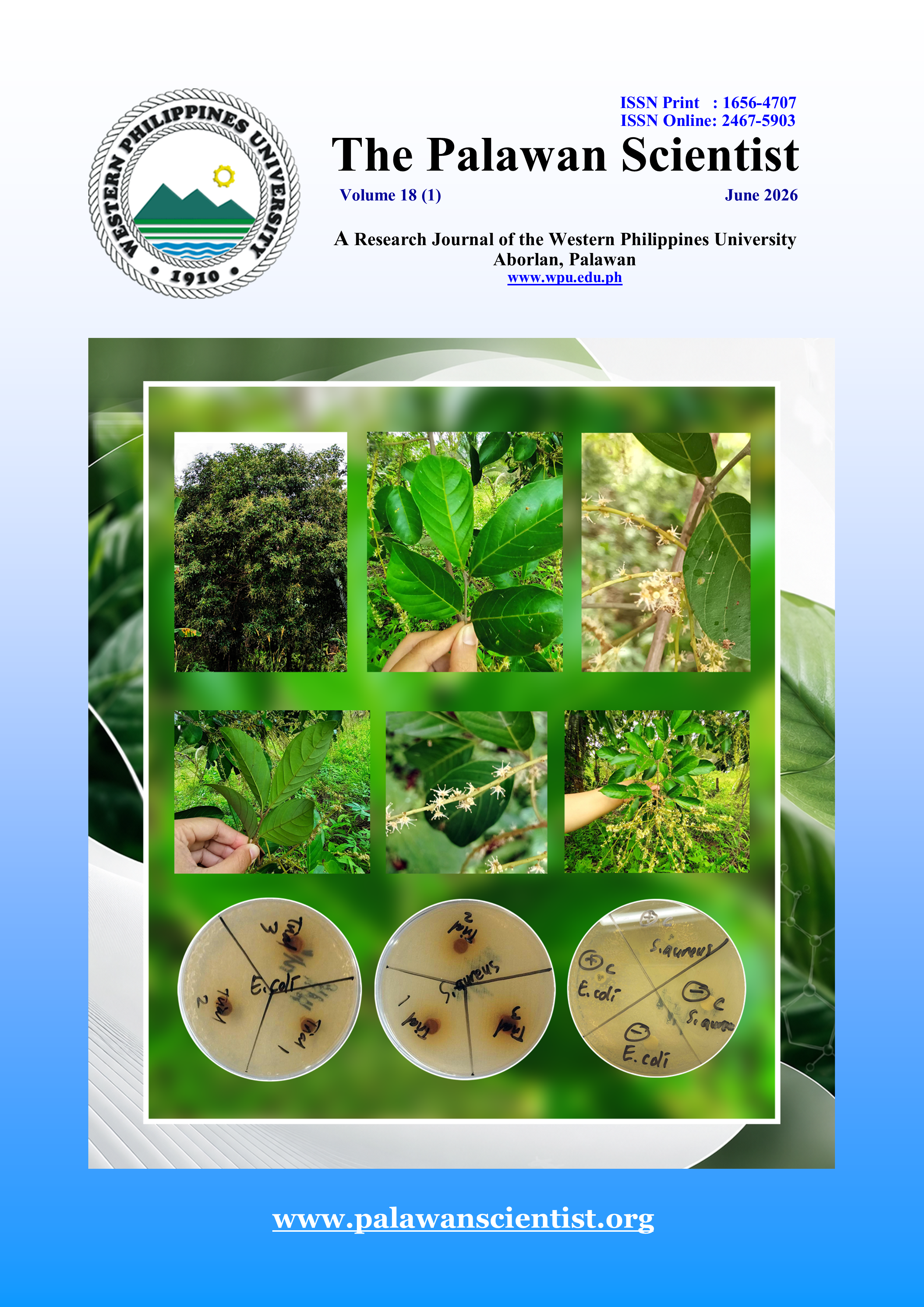
##plugins.themes.bootstrap3.article.main##

Abstract
Atuna racemosa Raf, locally known as “tabon-tabon” in the Philippines, is a fruit-bearing tree used as a souring agent for native Filipino dishes in Mindanao. Previous reports have shown its antimicrobial efficacy. However, limited studies have demonstrated its antioxidant potential. The study determined the phytochemical components of A. racemosa methanol fruit extract and evaluated its antioxidant profile using various in vitro systems. The antioxidant profile of A. racemosa methanol fruit extract was determined by radical scavenging (DPPH, superoxide radical, hydroxyl radical), reducing capacities (FRAP and MTT), and chelation activities. Methanol fruit extract of A. racemosa demonstrated a potent DPP radical inhibition comparable to ascorbic acid. It has also exhibited concentration- dependent hydroxyl radical scavenging activity and reducing power. However, low iron chelation and superoxide anion inhibition were observed, even at the highest concentration. Qualitative phytochemical analyses revealed the presence of carbohydrates, cardiac glycosides, steroids, terpenes/terpenoids, quinones, anthraquinones, flavonoids, phenolics, and tannin compounds, which may explain A. racemosa strong antioxidant behavior. These findings indicate that A. racemosa holds strong antioxidant potential, making it a vital natural antioxidant source that could be efficiently used in treating oxidative stress conditions.
How to Cite
Downloads
##plugins.themes.bootstrap3.article.details##
DPPH radical scavenging, hydroxyl radical, metal chelation, reducing capacities, superoxide radical
Afzal S, Abdul Manap AS, Attiq A, Albokhadaim I, Kandeel M, Alhojaily SM. 2023. From imbalance to impairment: the central role of reactive oxygen species in oxidative stress-induced disorders and therapeutic exploration. Frontiers in Pharmacology. 14:1269581. https://doi.org/10.3389/fphar.2023.1269581
Ang AMG, Deocampo RC. 2019. Effect of Storage Temperature and Duration on the Antioxidative Property of Atuna racemosa Raf. Fruits. Asian Journal of Biological and Life Sciences. 8(1):36-40. https://doi.org/10.5530/ajbls.2019.8.6
Apak R, Özyürek M, Güçlü K, Çapanoğlu E. 2016. Antioxidant Activity/Capacity Measurement. 1. Classification, physicochemical principles, mechanisms, and electron transfer (ET)-Based Assays. Journal of agricultural and food chemistry. 64(5):997–1027. https://doi.org/10.1021/acs.jafc.5b04739
Arfin S, Jha NK, Jha SK, Kesari KK, Ruokolainen J, Roychoudhury S, Rathi B, Kumar D. 2021. Oxidative Stress in Cancer Cell Metabolism. Antioxidants. 10(5):642. https://doi.org/10.3390/antiox10050642
Baltazar GJ, Ang AM, Pandan EJ, Presores GM. 2025. Phenolic Content and Antioxidant Capacity of the Different Parts of Atuna racemosa Raf. (Chrysobalanaceae). CMU Journal of Science. 28(2):96-107. https://doi.org/10.52751/cmujs.2024.v28i2.7c4t9205
Blagov AV, Summerhill VI, Sukhorukov VN, Zhigmitova EB, Postnov AY, Orekhov AN. 2024. Potential use of antioxidants for the treatment of chronic inflammatory diseases. Frontiers in Pharmacology. 15:1378335. https://doi.org/10.3389/fphar.2024.1378335
Brew-Daniels H, Harrison JJEK. 2025. A Review of the Ethnomedicine, Phytochemistry and Biological Activities of the Genus Parinari. Natural Product Communications. 20(2):1-21. https://doi.org/10.1177/1934578X251317831
Bueno PR, Cabrera RC, Yu GF. 2023. Antioxidant activity and phytochemicals of locally consumed plant foods from Baguio City, Philippines. Borneo Journal of Pharmacy. 6(2):190–207. https://doi.org/10.33084/bjop.v6i2.4546
Bueno PR, Yu GF. 2021. Evaluation of antioxidant activity and phytochemicals of selected methanol rattan shoot extracts from Morong, Bataan. Philippine Journal of Health Research and Development. 5(2):20-30.
Buenz EJ, Tillner JE, Limburg P, Bauer BA. 2007. Antibacterial properties and toxicity of Atuna racemosa extract depend on kernel maturity. Journal of Ethnopharmacology. 111(3):592–597. https://doi.org/10.1016/j.jep.2007.01.020
Caturano A, D’Angelo M, Mormone A, Russo V, Mollica MP, Salvatore T, Galiero R, Rinaldi L, Vetrano E, Marfella R, and others. 2023. Oxidative stress in Type 2 diabetes: Impacts from pathogenesis to lifestyle modifications. Current Issues in Molecular Biology. 45(8):6651–6666. https://doi.org/10.3390/cimb45080420
Chandimali N, Bak SG, Park EH, Lim HJ, Won YS, Kim EK, Park SI, Lee SJ. 2025. Free radicals and their impact on health and antioxidant defenses: a review. Cell Death Discovery. 11:19. https://doi.org/10.1038/s41420-024-02278-8
Chaves N, Santiago A, Alías JC. 2020. Quantification of the antioxidant activity of plant extracts: Analysis of sensitivity and hierarchization based on the method used. Antioxidants. 9(1):76. https://doi.org/10.3390/antiox9010076
Chen X, Li H, Zhang B, Deng Z. 2022. The synergistic and antagonistic antioxidant interactions of dietary phytochemical combinations. Critical reviews in food science and nutrition. 62(20):5658–5677. https://doi.org/10.1080/10408398.2021.1888693
De Almeida AJPO, de Oliveira JCPL, da Silva Pontes LV, de Souza Júnior JF, Gonçalves TAF, Dantas SH, de Almeida Feitosa MS, Silva AO, de Medeiros IA. 2022. ROS: Basic concepts, sources, cellular signaling, and its implications in aging pathways. Oxidative Medicine and Cellular Longevity. 2022:1225578. https://doi.org/10.1155/2022/1225578
El-Ramady H, Hajdú P, Törős G, Badgar K, Llanaj X, Kiss A, Abdalla N, Omara AE-D, Elsakhawy T, Elbasiouny H, and others. 2022. Plant nutrition for human health: A pictorial review on plant bioactive compounds for sustainable agriculture. Sustainability. 14(14):8329. https://doi.org/10.3390/su14148329
Elshafie HS, Camele I, Mohamed AA. 2023. A comprehensive review on the biological, agricultural and pharmaceutical properties of secondary metabolites based-plant origin. International Journal of Molecular Sciences. 24(4):3266. https://doi.org/10.3390/ijms24043266
Fujii J, Homma T, Osaki T. 2022. Superoxide Radicals in the Execution of Cell Death. Antioxidants. 11(3):501. https://doi.org/10.3390/antiox11030501
Gicole GJS, Petros GDT, Nuñeza OM, Uy MM. 2019. Phytochemical screening, DPPH radical scavenging activity and brine shrimp lethality of the leaf extracts of Atuna racemosa. Bulletin of Environment, Pharmacology and Life Sciences. 8:76–80.
Gulcin İ, Alwasel SH. 2022. Metal Ions, Metal Chelators and Metal Chelating Assay as Antioxidant Method. Processes. 10(1):132. https://doi.org/10.3390/pr10010132
Gulcin İ, Alwasel SH. 2023. DPPH Radical Scavenging Assay. Processes. 11(8):2248. https://doi.org/10.3390/pr11082248
Gutiérrez-Del-Río I, López-Ibáñez S, Magadán-Corpas P, Fernández-Calleja L, Pérez-Valero Á, Tuñón-Granda M, Miguélez EM, Villar CJ, Lombó F. 2021. Terpenoids and polyphenols as natural antioxidant agents in food preservation. Antioxidants (Basel, Switzerland). 10(8):1264. https://doi.org/10.3390/antiox10081264
Hassanpour SH, Doroudi A. 2023. Review of the antioxidant potential of flavonoids as a subgroup of polyphenols and partial substitute for synthetic antioxidants. Avicenna Journal of Phytomedicine. 13(4):354–376. https://doi.org/10.22038/AJP.2023.21774
Huang SK-H, Bueno PRP, Garcia PJB, Lee M.-J, De Castro-Cruz KA, Leron RB, Tsai P-W. 2023. Antioxidant, anti-Inflammatory and antiproliferative effects of Osmanthus fragrans (Thunb.) Lour. flower extracts. Plants. 12(17):3168. https://doi.org/10.3390/plants12173168
Hussain T, Tan B, Yin Y, Blachier F, Tossou MC, Rahu N. 2016. Oxidative Stress and Inflammation: What Polyphenols Can Do for Us?. Oxidative medicine and cellular longevity. 2016:7432797. https://doi.org/10.1155/2016/7432797
Itam A, Wati MS, Agustin V, Sabri N, Jumanah RA, Efdi M. 2021. Comparative Study of Phytochemical, Antioxidant, and Cytotoxic Activities and Phenolic Content of Syzygium aqueum (Burm. f. Alston f.) Extracts Growing in West Sumatera Indonesia. The Scientific World Journal. 2021:5537597. https://doi.org/10.1155/2021/5537597
Jafri SAA, Khalid ZM, Khan MZ, Jogezai N. 2022. Evaluation of phytochemical and antioxidant potential of various extracts from traditionally used medicinal plants of Pakistan. Open Chemistry. 20(1):1337–1356. https://doi.org/10.1515/chem-2022-0242
Juan CA, Pérez de la Lastra JM, Plou FJ, Pérez-Lebeña E. 2021. The chemistry of reactive oxygen species (ROS) revisited: Outlining their role in biological macromolecules (DNA, lipids and proteins) and induced pathologies. International Journal of Molecular Sciences. 22(9):4642. https://doi.org/10.3390/ijms22094642
Kaseke T, Pfukwa T, Nxumalo K, and Shinga M, Opara U, Fawole. 2025. Parinari curatellifolia: A treasure trove of phytochemicals, nutritional benefits, and biological activities. Heliyon. 11:e41647. https://doi.org/10.1016/j.heliyon.2025.e41647
Kew Science. 2016. Chrysobalanaceae R.Br. Plants of the World Online. [accessed 2025 Sep 28] https://powo.science.kew.org/taxon/urn:lsid:ipni.org:names:30007860-2
Khutami C, Sumiwi SA, Khairul Ikram NK, Muchtaridi M. 2022. The effects of antioxidants from natural products on obesity, dyslipidemia, diabetes and their molecular signaling mechanism. International Journal of Molecular Sciences. 23(4):2056. https://doi.org/10.3390/ijms23042056
Lee JE, Jayakody JTM, Kim JI, Jeong JW, Choi KM, Kim TS, Seo C, Azimi I, Hyun JM, Ryu BM. 2024. The Influence of Solvent Choice on the Extraction of Bioactive Compounds from Asteraceae: A Comparative Review. Foods. 13(19):3151. https://doi.org/10.3390/foods13193151
Leite KCS, Garcia LF, Lobón GS, Thomaz DV, Moreno EKG, Carvalho MF, de Rocha ML, Santos WTP, Gil ES. 2018. Antioxidant activity evaluation of dried herbal extracts: an electroanalytical approach. Revista Brasileira de Farmacognosia. 28(3):325–332. https://doi.org/10.1016/j.bjp.2018.04.004
Liu Y, Nair MG. 2010. An efficient and economical MTT assay for determining the antioxidant activity of plant natural product extracts and pure compounds. Journal of Natural Products. 73(7):1193-1195. https://doi.org/10.1021/np1000945
Luo M, Zhou L, Huang Z, Li B, Nice EC, Xu J, Huang C. 2022. Antioxidant therapy in cancer: Rationale and progress. Antioxidants (Basel, Switzerland). 11(6):1128. https://doi.org/10.3390/antiox11061128
Mwamatope B, Chikowe I, Tembo DT, Kamanula JF, Masumbu FFF, Kumwenda FD. 2023. Phytochemical Composition and Antioxidant Activity of Edible Wild Fruits from Malawi. BioMed Research International. 1:621434. https://doi.org/10.1155/2023/2621434
Nadayag J, Dapar M, Aranas A, Mindo R, Cabrido CK, Manting MME, Torres MAJ, Demayo CG. 2019. Qualitative assessment of the antimicrobial, antioxidant, and phytochemical properties of the ethanolic extracts of the inner bark of Atuna racemosa. Pharmacophore. 10(1):52-59.
Nkosi NJ, Shoko T, Manhivi VE, Slabbert RM, Sultanbawa Y, Sivakumar D. 2022. Metabolomic and chemometric profiles of ten southern African indigenous fruits. Food Chemistry. 381:1-10. https://doi.org/10.1016/j.foodchem.2022.132244
Ou B, Huang D, Hampsch-Woodill M, Flanagan JA, Deemer EK. 2002. Analysis of antioxidant activities of common vegetables employing oxygen radical absorbance capacity (ORAC) and ferric reducing antioxidant power (FRAP) assays: a comparative study. Journal of Agricultural and Food Chemistry. 50(11):3122–3128. https://doi.org/10.1021/jf0116606
Pacaňa JM, Galarpe VRKR. 2017. Phytochemical screening and toxicity testing of Atuna racemosa Rafin. chrysobalanaceae shell and seed extracts. International Journal of Advanced and Applied Sciences. 4(11):110-115. https://doi.org/10.21833/ijaas.2017.011.017
Pacaňa JM, Galarpe VRKR. 2017. Antibacterial property of Atuna racemosa Rafin. Chrysobalanaceae shell and kernel extracts (Aqueous, Methanol, Ethyl Acetate, and Decoction). International Journal of Biosciences. 11(1):443-448. http://dx.doi.org/10.12692/ijb/11.1.443-448
Phan MAT, Paterson J, Bucknall M, Arcot J. 2018. Interactions between phytochemicals from fruits and vegetables: Effects on bioactivities and bioavailability. Critical reviews in food science and nutrition. 58(8):1310–1329. https://doi.org/10.1080/10408398.2016.1254595
Prance GT. 2004. The Uses of Atuna racemosa Raf. (Chrysobalanaceae) in Samoa. Economic Botany. 58(3):470–475. http://www.jstor.org/stable/4256839
Rathi RPG, Altoveros NC, Borromeo TH, Macabecha CGA. 2019. Antimicrobial and phytochemical properties of Atuna racemosa Raf. kernel extract. Indian Journal of Agricultural Research. 53(6):733-736. https://doi.org/10.18805/IJARe.A-415
Richards A, Chaurasia S. 2022. Antioxidant Activity and Reactive Oxygen Species (ROS) Scavenging Mechanism of Eriodictyon californium, an Edible Herb of North America. Journal of Chemistry. 1:1–8. https://doi.org/10.1155/2022/6980121
Rudrapal M, Khairnar SJ, Khan J, Dukhyil AB, Ansari MA, Alomary MN, Alshabrmi FM, Palai S, Deb PK, Devi R. 2022. Dietary polyphenols and their role in oxidative stress-induced human diseases: Insights into protective effects, antioxidant potentials and mechanism(s) of action. Frontiers in Pharmacology. 13:806470. https://doi.org/10.3389/fphar.2022.806470
Rumpf J, Burger R, Schulze M. 2023. Statistical evaluation of DPPH, ABTS, FRAP, and Folin-Ciocalteu assays to assess the antioxidant capacity of lignins. International Journal of Biological Macromolecules. 233:123470. https://10.1016/j.ijbiomac.2023.123470
Salekeen R, Haider AN, Akhter F, Billah MM, Islam ME, Didarul Islam KM. 2022. Lipid oxidation in pathophysiology of atherosclerosis: Current understanding and therapeutic strategies. International Journal of Cardiology Cardiovascular Risk and Prevention. 14: 200143. https://doi.org/10.1016/j.ijcrp.2022.200143
Sharifi-Rad M, Anil Kumar NV, Zucca P, Varoni EM, Dini L, Panzarini E, Rajkovic J, Tsouh Fokou PV, Azzini E, Peluso I, and others. 2020. Lifestyle, oxidative stress, and antioxidants: Back and forth in the pathophysiology of chronic diseases. Frontiers in Physiology. 11:694. https://doi.org/10.3389/fphys.2020.00694
Siddeeg A, AlKehayez NM, Abu-Hiamed HA, Al-Sanea EA, Al-Farga AM. 2021. Mode of action and determination of antioxidant activity in the dietary sources: An overview. Saudi Journal of Biological Sciences. 28(3):1633–1644. https://doi.org/10.1016/j.sjbs.2020.11.064
Sridhar K, Charles AL. 2019. In vitro antioxidant activity of Kyoho grape extracts in DPPH and ABTS assays: Estimation methods for EC50 using advanced statistical programs. Food Chemistry. 275:41–49. https://doi.org/10.1016/j.foodchem.2018.09.040
Steenis CGGJ, Steenis-Kruseman MJ. 1950. Kebun Raya Indonesia. & Lembaga Ilmu Pengetahuan Indonesia. Flora Malesiana (Vol. 10). Noordhoff-Kolff. https://www.biodiversitylibrary.org/item/91477
Tila CA, Mopera L, Barrion AS, Israel KA. 2022. Phytochemical analysis and antibacterial potential of Tabon-tabon (Atuna racemosa Raf) fruit extract against E. Coli BIOTECH 1634. Philippine Journal of Science. 151(5):1579-1588. https://doi.org/10.56899/151.05.03
Tvrdá E, Benko F. 2020. Free radicals: what they are and what they do. In Pathology (pp. 3–13). Elsevier. https://doi.org/10.1016/b978-0-12-815972-9.00001-9
Yu GFB, Cabrera RCR, Bueno PRP, Sia IC. 2020. The in vitro antioxidant activity and phytochemicals of locally consumed plant foods from Quezon Province, Philippines. Acta Medica Philippina. 54(2):151-160. https://doi.org/10.47895/amp.v54i2.1531
Zhang A, Fang Y, Wang H, Li H, Zhang Z. 2011. Free-radical scavenging properties and reducing power of grape cane extracts from 11 selected grape cultivars widely grown in China. Molecules (Basel, Switzerland). 16(12):10104–10122. https://doi.org/10.3390/molecules161210104

This work is licensed under a Creative Commons Attribution-NonCommercial 4.0 International License.