Skip to contentSkip to content
  • Home
  • Editorial Board
  • Publish
    • Guide for Authors
    • Peer-review Process
    • Publication Process
    • Policies
    • Code of Ethics
    • Templates
    • Frequently Asked Questions
  • Indexing
  • Advanced Online Publication
  • Recent Issue
  • ARCHIVE
  • Submit Manuscript
Close MenuClose Menu

Archives

  • June 2026
  • May 2026
  • April 2026
  • February 2026
  • January 2026
  • December 2025
  • November 2025
  • October 2025
  • September 2025
  • August 2025
  • July 2025
  • June 2025
  • May 2025
  • April 2025
  • February 2025
  • December 2024
  • October 2024
  • August 2024
  • July 2024
  • June 2024
  • December 2023
  • November 2023
  • October 2023
  • June 2023
  • May 2023
  • December 2022
  • November 2022
  • October 2022
  • August 2022
  • June 2022
  • December 2021
  • June 2021
  • May 2021
  • February 2021
  • January 2021
  • December 2020
  • November 2020
  • October 2020
  • August 2020
  • July 2020
  • May 2020
  • April 2020
  • March 2020
  • October 2019
  • August 2019
  • July 2019
  • June 2019
  • March 2019
  • February 2019
  • November 2018
  • October 2018
  • September 2018
  • July 2018
  • June 2018
  • May 2018
  • April 2018
  • March 2018
  • January 2018
  • September 2017
  • July 2017
  • June 2017
  • May 2017
  • August 2016
  • June 2016
  • August 2015
  • July 2015
  • June 2015
  • May 2015
  • April 2015
  • February 2015
  • July 2014
  • June 2014
  • March 2013
  • November 2012

Meta

  • Log in

Categories

  • Editorial
  • Fast Track Articles
  • Recent Issue
  • Research Journal
  • Research Paper
  • Special Issue iCEAT 2023
  • The Palawan Scientist
  • Uncategorized

Tag: edible insects in Southeast Asia

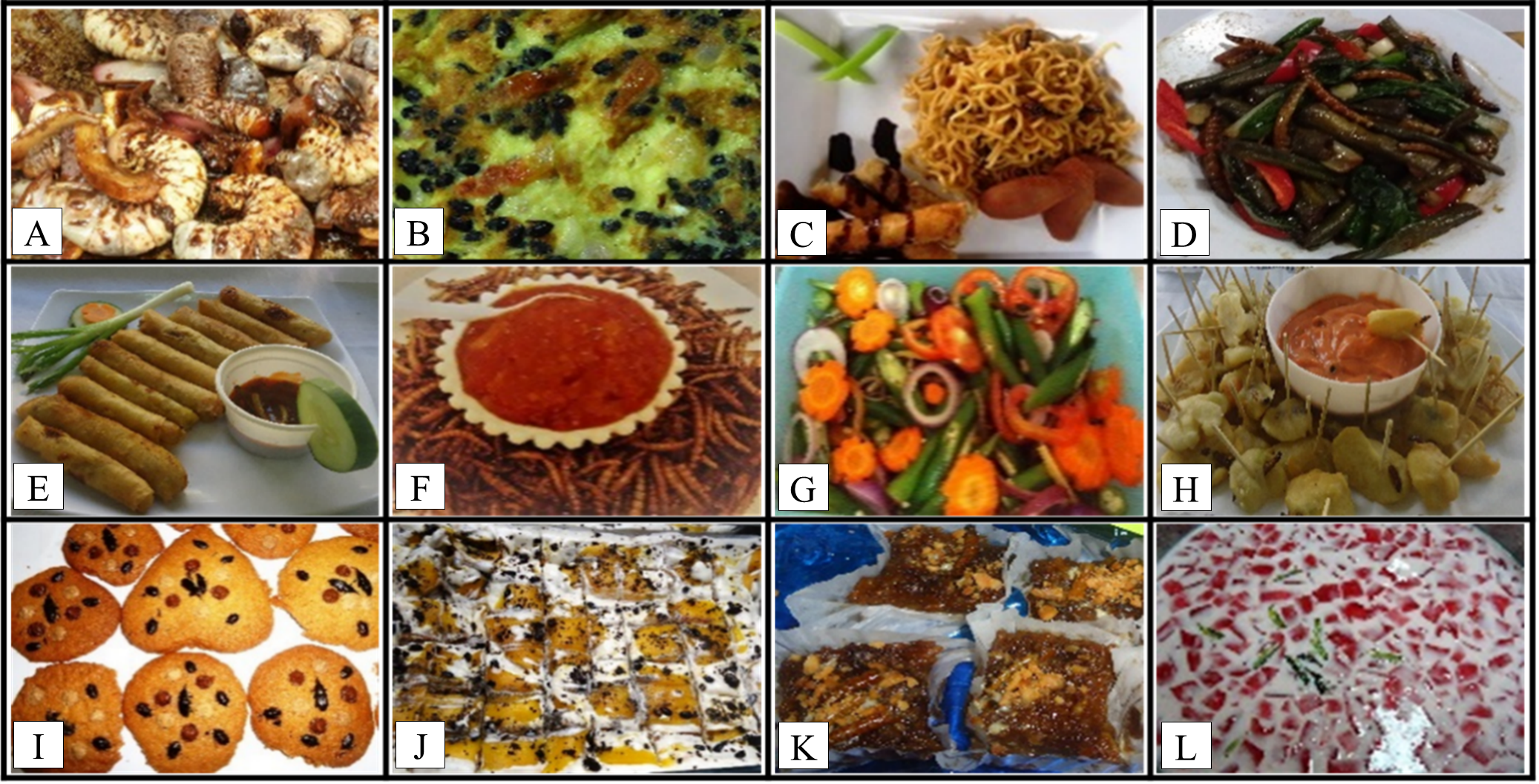
Selected Filipino insect-based dishes developed by the students and served during the insect-eating festivals. (A) Adobong “batod” (Rhynchophorus ferrugineus A.G.Olivier, 1791); (B) scrambled eggs with Malaysian black bugs (Scotinophara coarctata (Fabricius)); (C) pansit (Filipino-style noodles) with grasshoppers Oxya chinensis (Thunberg, 1815); (D) stir-fried vegetables topped with crispy fried superworms Zophobas morio (Fabricius, 1776); (E) superworm Z. morio lumpia (fried insect rolls in rice wrapper); (F) deep-fried superworms (Z. morio) with spicy chili sauce; (G) steamed vegetable salad with fried superworms (Z. morio); (H) fried palapa (traditional crochets) with Z. morio; (I) buttered insect cookies (S. coarctata; and Odoiporus longicollis G.A.K.Marshall, 1930); (J) Graham mango float dessert with Malaysian black bugs (S. coarctata); (K) superworm (Z. morio); biko (steamed rice cake with caramelized coconut); and (L) cathedral window gelatin with grasshoppers (Oxya chinensis Thunberg, 1815).

Insect-eating festivals as a tool for promoting entomophagy in Muslim MindanaoInsect-eating festivals as a tool for promoting entomophagy in Muslim Mindanao

11:07 am

Selected Filipino insect-based dishes developed by the students and served during the insect-eating festivals. (A) Adobong “batod” (Rhynchophorus ferrugineus A.G.Olivier, ...
Read FullRead Full
TopBack to Top

© 2026. Western Philippines University